
How Arrest Warrants Work in Craig County
Virginia Code §§ 19.2-71 and 19.2-72 give certain judges, clerks, and magistrates power to issue criminal process. A complaint must be sworn. Probable cause has to back an arrest warrant. Once issued, the warrant names the accused and the offense, directs an arrest and an appearance before the proper court, and carries the issuing official's signature. For many complaints and bail questions, Craig County's magistrates are a practical first stop. The Circuit and district courts each keep their own case files. The sheriff posts no public online arrest-warrant roster and runs no separate warrant line.
Craig County Arrest Warrants Start With Oath
An authorized issuing official reviews a sworn complaint, and a magistrate often handles the first complaint in Craig County. The law does not route every complaint through one named Craig officer. The magistrate weighs probable cause and issues process; the court named on the warrant then receives the case. The Virginia warrant statute spells out the required contents and directions. The local District 25 magistrate contact sits at the courthouse complex and is marked "Video Only," so call the sheriff's published number to confirm routing rather than assuming an open public counter. The code page shows the legal form rules, not any private case.
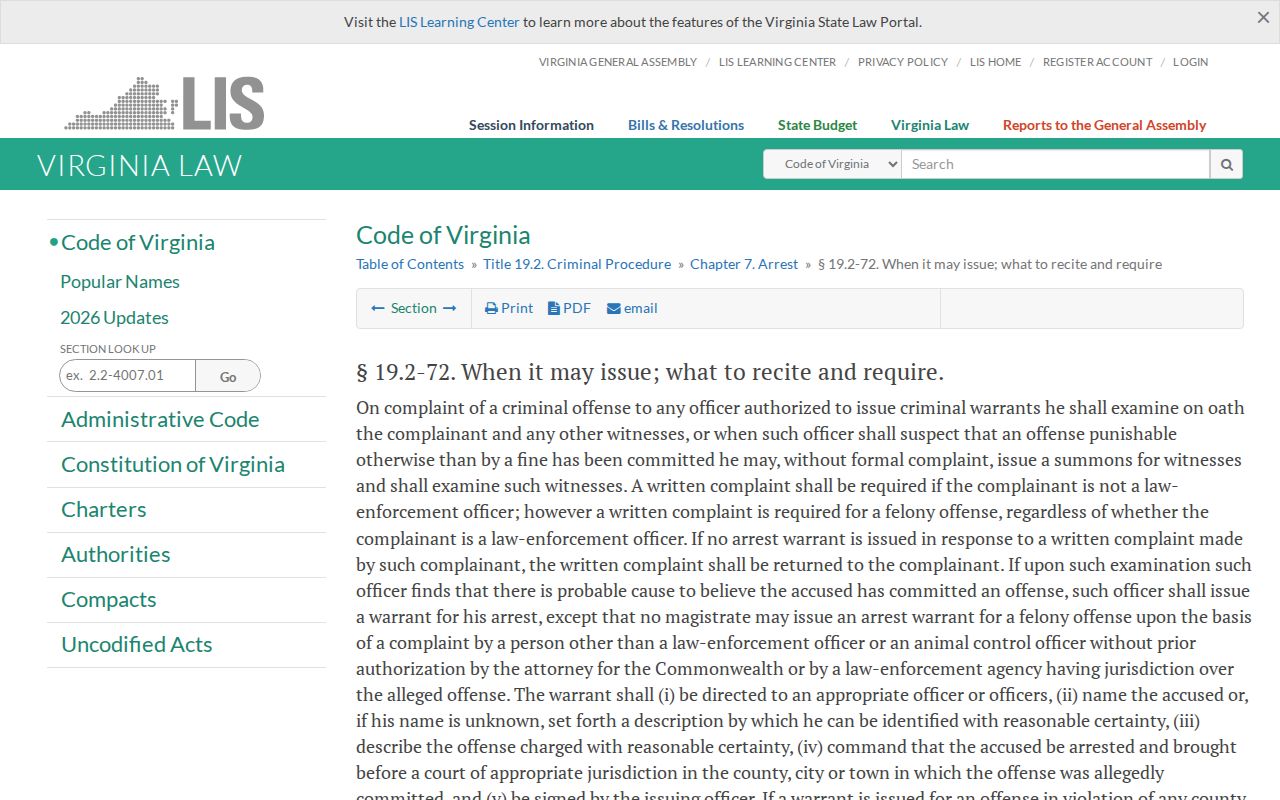
Issuance is a court decision; service and custody are separate steps.
Arrest Warrants: What They Contain
Virginia's DC-314 manual describes a multi-copy misdemeanor warrant form with identity, charge, issuing, hearing, and service fields. That schema applies statewide, not to one Craig County file. A sample like CR12345678-90 shows a court-help case-number pattern, not a warrant number assigned to a person.
| Case tracking | Jurisdiction, court, case or offense number, and warrant issue date connect the paper to its file. |
|---|---|
| Identity block | Identifying fields may be redacted or protected; the public page must not expose private identifiers. |
| Charge | Offense description, code section, crime code, and classification may appear. |
| Issuing authority | Names the judge, clerk where authorized, or magistrate who signs the process. |
| Hearing / return | Shows where and when the person must appear, when the field is public. |
| Service return | May note agency, officer, service date, and result; public case search may omit these details. |
Craig County Arrest Warrant Form Fields
The Virginia form manual labels arrest-versus-summons, issuing official, charge and class, hearing date, directed agency, service date, officer, badge, and attorney fields. Those labels trace how a file moves from court to officer and back again. They do not promise that OCIS displays every item or that a public records request returns it. Craig County courts use the same forms as the rest of the state. The Virginia criminal forms index lists DC-314 and its related forms.
How Warrants Get Served in Craig County
The Craig County Sheriff's Office is the county's named law-enforcement contact. The county plan also lists four Virginia State Police troopers assigned to the area, though it never says which officer serves a given warrant. Under Virginia Code § 19.2-76, authorized officers may execute process within the statute's rules, and jail officers may execute Virginia process on someone held in the regional facility. After an arrest, a magistrate or judge makes the release decision. Arrest outside the issuing locality? State law provides a prompt bail hearing there. For issuance and recall, contact the court; for service and custody, ask the sheriff or the jail.
Craig County Warrant Service Has Separate Steps
The form's return fields capture a handoff: the issuing court prepares process, an officer or agency receives it, service is attempted or completed, and the court keeps the underlying case. A blank service entry on a public docket does not prove no attempt was made. A sheriff's operational answer and a clerk's case answer are related, yet they are not interchangeable. Craig County readers should treat them as separate questions. Qualifying felony warrants and capiases must be reported to VCIN/NCIC, but those systems serve law enforcement only. They create no public Craig County search and do not guarantee that an OCIS result shows current service status. The Virginia execution statute explains the officer and jail process in statewide terms.
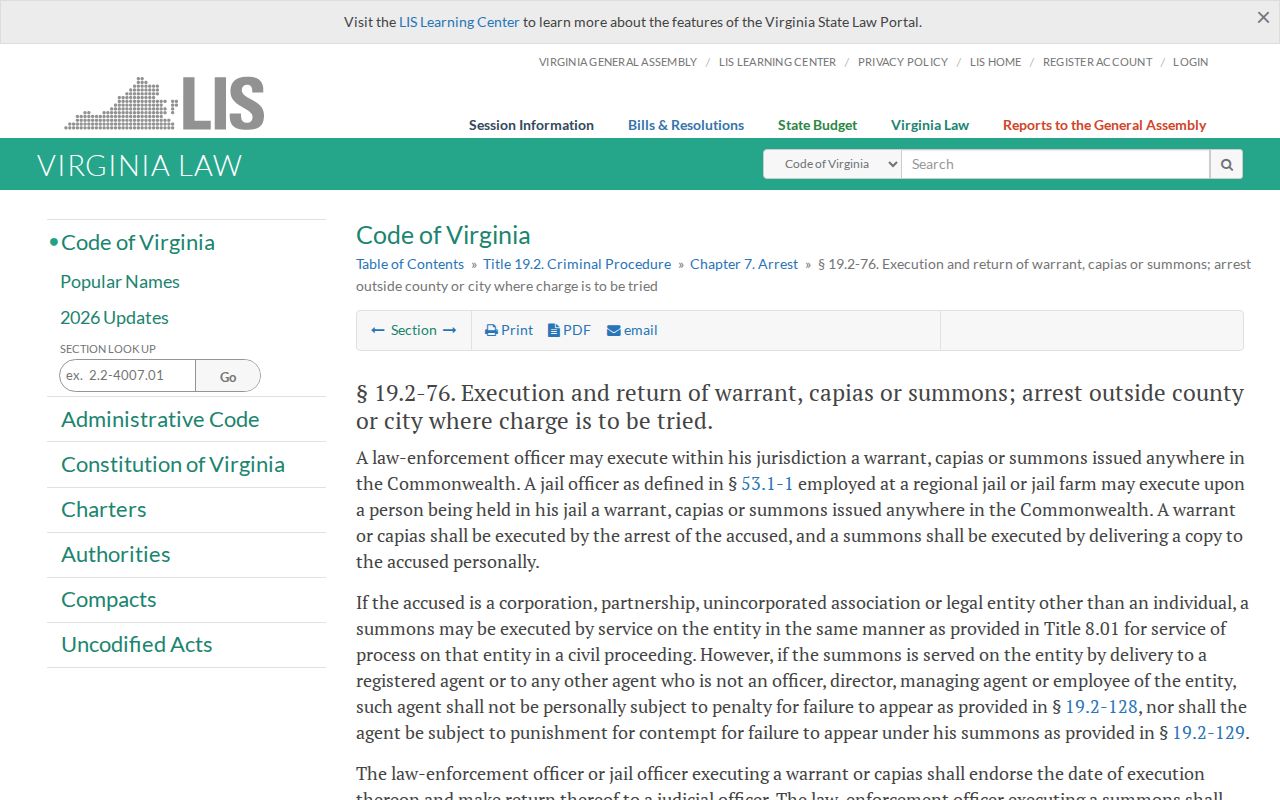
Ask the Craig County court about the file, and ask the sheriff about service. The Botetourt-Craig Regional Jail information page gives the regional facility's contact and custody context.
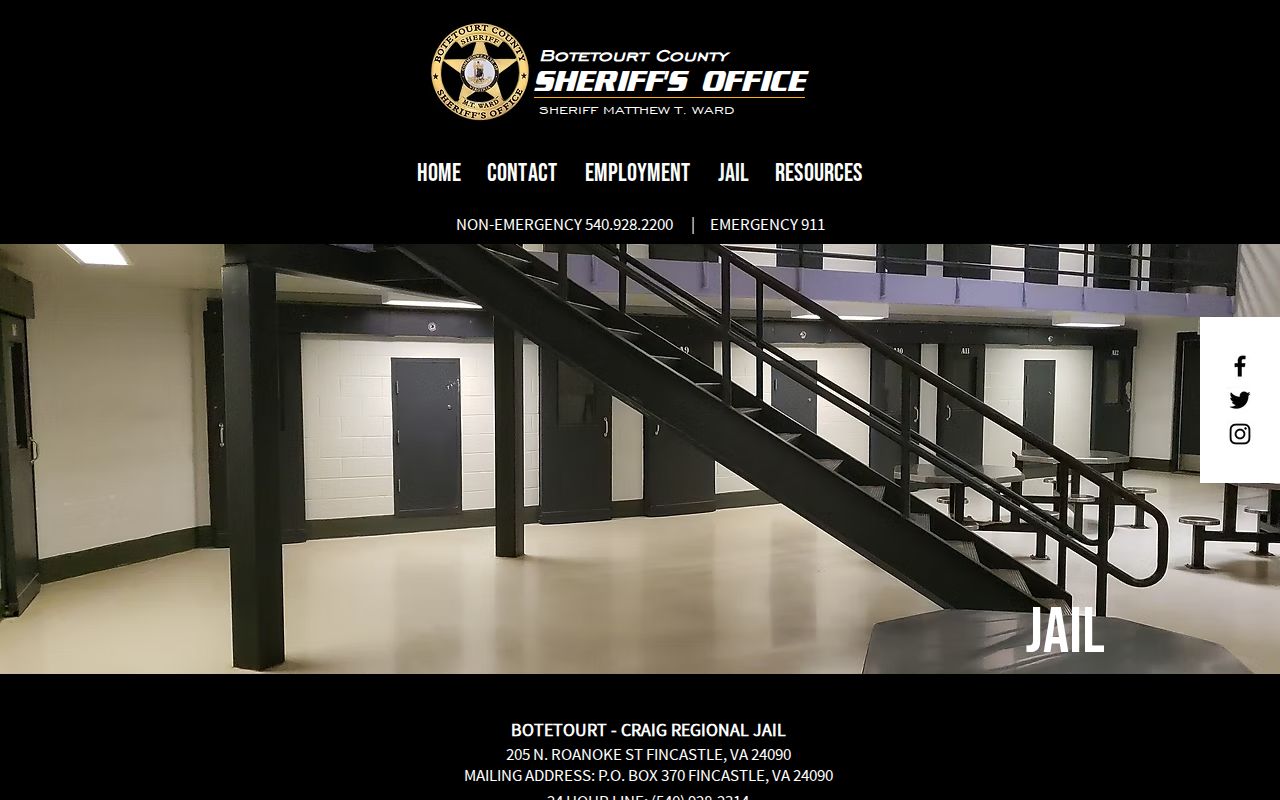
A jail inquiry concerns custody; the issuing clerk maintains the court case.
Arrest Warrants, Summonses, and Bench Warrants
An arrest warrant follows probable-cause review. A summons directs a person to appear. A bench warrant or capias usually follows a missed court obligation or appearance. The label shapes what to ask the clerk and your lawyer, and it should never be inferred from a blank search. See the Craig County bench-warrant process for the missed-date route.
| Feature | Arrest Warrant | Summons | Bench Warrant |
|---|---|---|---|
| What it orders | Arrest and appearance | Appearance on a set date | Custody and return to court |
| Basis | Sworn complaint and probable cause | Charging and court process | Missed obligation or court order |
| Issuing route | Authorized judge, clerk, or magistrate | Court process under applicable rules | Issuing court or judge |
| Response | Confirm bond and court instructions | Attend as directed | Ask about recall, appearance, or bond |
Craig County Arrest Warrant Access Has Limits
OCIS exposes some public case information but is not a complete warrant register. Juvenile law-enforcement records are protected under Virginia Code § 16.1-301, J&DR information is restricted online, and sealed process may not appear at all. A public case search also offers no normal public VCIN/NCIC lookup. For a first-party question in Craig County, write down the court, case number, charge, and next date, then call the Circuit Clerk or the combined district clerk. Ask the sheriff whether it holds service information. If a record is sealed or restricted, the office can explain what an authorized person may request. The juvenile-record statute explains why no public roster covers every process.
Handling an Arrest Warrant in Your Name
Facing an arrest warrant in Craig County starts with a phone call, not a guess. Confirm the issuing court, the exact process, and any return date before you arrange an appearance. A Virginia attorney can tell you whether to ask the court to recall the warrant, plan a voluntary surrender, or deal with bond. The sheriff's public page lists office contact information only. It posts no surrender window, no warrant phone line, and no active warrant list. Bond questions point to Botetourt-Craig Regional Jail in Fincastle. Its page outlines personal-recognizance, unsecured, and secured bond, but quotes no Craig County amount, payment method, or walk-in schedule. Call both the court and the jail before you drive anywhere, and hold onto the court order or receipt that shows your next step.
Safety: Do not pay an unsolicited caller or use a number in a threatening message; call the official clerk or sheriff contact and ask counsel about surrender.
The Virginia Department of Corrections jail directory carries the Botetourt-Craig Regional Jail entry, including its Fincastle address, for anyone tracking a Craig County warrant.
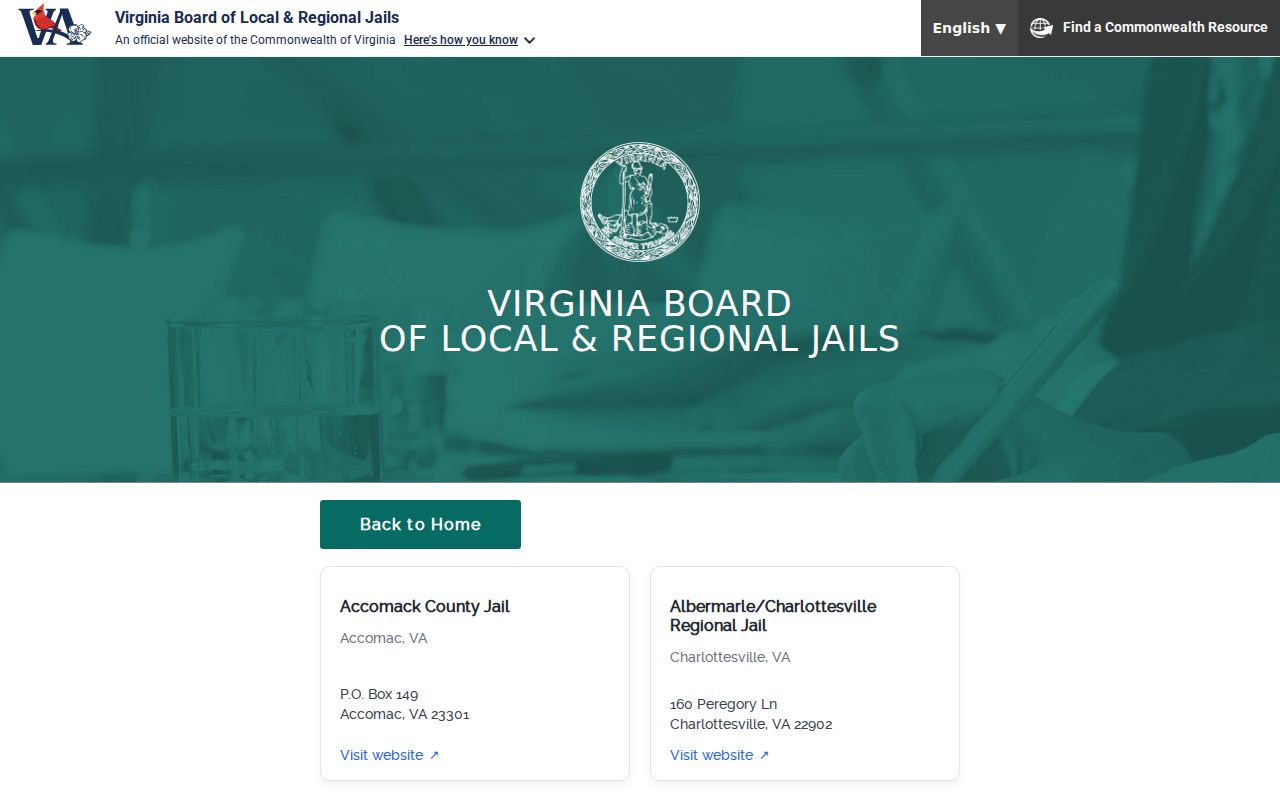
Confirm custody or visiting details with the facility before traveling.
Craig County Arrest Warrant Bond Questions
A magistrate or a judge sets the release terms, and no Craig County bond amount or counter schedule is posted anywhere. Botetourt-Craig Regional Jail's public page walks through personal-recognizance, unsecured, and secured bond in general terms. It quotes no figure for a case. Paying a balance does not by itself resolve the underlying charge. Before you travel, ask which facility will hold the person, whether bond has been set, what payment or surety the jail accepts, what identification to bring, and when the next hearing falls. Craig County spans 330 square miles of rural road, and the jail sits up in Fincastle, so calling ahead saves a long trip. The regional jail bonding page covers bond categories generally, not the terms of any individual Craig County case.
That jail page outlines bond types only; a magistrate or judge sets the actual terms in a Craig County case.